
exchange for AI agents
The concept of an exchange for AI agents plays a transformative role in supporting data monetization in today’s digital economy. As AI technologies continue to evolve, vast amounts of data are generated, analyzed, and utilized by autonomous agents operating in dynamic marketplaces. An exchange for AI agents provides a structured environment where these intelligent systems can interact, trade, and leverage data assets effectively, creating new opportunities for monetizing data. Understanding how such exchanges support data monetization involves exploring the mechanisms, benefits, and innovations that underpin these platforms.
At the heart of the exchange for AI agents is the facilitation of seamless data sharing and trading among various AI systems. Data monetization hinges on the ability to transform raw data into valuable insights or actionable information that can be bought, sold, or licensed. The exchange acts as a marketplace where AI agents can discover, request, and access relevant data sets or processed information, which they can then use to optimize their algorithms, generate predictions, or develop new services. This marketplace model enables data owners to monetize their assets by making data available to AI agents in a controlled and transparent manner.
One significant way the exchange for AI agents supports data monetization is through secure and standardized transactions. The exchange ensures that data is exchanged under predefined rules and conditions, protecting the interests of both data providers and consumers. Smart contracts and automated payment systems can be embedded within the exchange to facilitate instant and trustworthy transactions. By reducing friction and building trust, these mechanisms encourage more participants to engage in data trading, thus increasing the liquidity and value of data assets available on the platform.
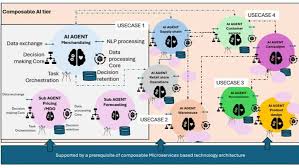
How does exchange for AI agents support data monetization?
Another important aspect is the use of advanced privacy-preserving technologies within the exchange for AI agents. Data monetization often involves sensitive or proprietary information, which raises concerns about privacy and compliance with regulations such as GDPR. To address this, exchanges implement techniques like differential privacy, secure multi-party computation, and federated learning. These technologies enable AI agents to use or analyze data without exposing the raw information, allowing data owners to monetize their data while maintaining control over privacy. This balance between accessibility and confidentiality is crucial for fostering trust and encouraging more data sharing within the ecosystem.
The exchange for AI agents also enhances data monetization by enabling dynamic pricing models based on supply and demand. Unlike traditional static pricing, this approach allows prices to fluctuate according to the value perceived by AI agents at any given time. For instance, an AI agent needing real-time market data may pay a premium compared to one interested in historical records. This flexibility incentivizes data providers to offer diverse data types and qualities, maximizing their revenue potential. Additionally, AI agents themselves can negotiate and optimize data acquisition costs autonomously, increasing efficiency in the data economy.
Interoperability is another critical factor that the exchange for AI agents leverages to support data monetization. The platform is designed to accommodate heterogeneous AI systems from various domains and developers. By ensuring compatibility through standardized data formats, communication protocols, and APIs, the exchange creates a broad network of data providers and consumers. This diversity not only expands the range of monetizable data but also fosters innovation as AI agents can combine and enrich multiple data sources to generate higher-value insights, creating new monetization opportunities.
Moreover, analytics and feedback loops embedded within the exchange help improve the quality and relevance of data assets over time. AI agents can evaluate the usefulness of purchased data, rate providers, and recommend better data sets, creating a self-improving marketplace. This ongoing refinement ensures that data monetization efforts remain efficient and aligned with market needs, benefiting all stakeholders.
In summary, the exchange for AI agents supports data monetization by providing a secure, interoperable, and dynamic marketplace where AI systems can trade data assets efficiently. Through mechanisms such as smart contracts, privacy-preserving technologies, flexible pricing, and continuous feedback, these exchanges unlock new revenue streams for data owners while enhancing the capabilities of AI agents. As this ecosystem grows, it promises to revolutionize how data is valued, shared, and monetized across industries.


